

Psyche Attack - Part Three: The House Is Yours
Protection always filters broadly. What it keeps out, and what it quietly takes with it - and why the real thing isn't something you do, but something your architecture becomes.
PSYCHE ATTACKENERGY WORKSOVEREIGNTYSHADOW & DARKNESS


I've written this post one too many times. The structure changed, then the concept changed, then a draft got approved as a decent one - and still I wasn't convinced enough to publish. Time went by, and I stayed devoted to an impossible puzzle: what I actually want to say here, because it surely isn't the list of techniques the teaser promised.
Regardless of everything, one question still insists on an answer. Everyone, and their mother, wants to know: "Was it a psychic attack?" It struck me that I never reached for that label. Whether I already understood something without being able to say it, or whether the actual damage kept dragging my attention somewhere more immediate than the vocabulary, I still can't tell you.
There was a stretch I now refer to, in scare quotes, as my "psychic attack" episode. I didn't call it that back then. Someone did what they did. It was ordinary relational violence - no esoteric machinery, no operator running energetic abuse from a distance, just a person and the damage a person can do. You probably, sadly, know how much that can be. Following the simplest logic, two ingredients make an attack psychic: an attack, and a psychic who can run one - someone with the developed capacity to impose the energetic mechanics of abuse. My story has the first and not the second. The damage didn't care which label I used. What I thought had happened was only the mundane surface, and my subtler bodies took the beating anyway. The harm landed in places it wasn't supposed to be able to reach. The episode didn't happen because I named the violence wrongly; it happened at a depth I wasn't yet aware of.
Protecting myself from that damage, on the other hand, was the stretch with no connection to anything larger - emptiness, silence, drought. The medication I was taking blocked the line efficiently. That was its job, so I wasn't complaining much. But it's necessary to name it as a cost too. Not pain, exactly - the absence underneath pain. The quiet I'd been praying for arrived on schedule, and the same quiet was the bill. What kept the damage out kept everything else out with it - that's the part I only recognized later, once there was enough of me back to notice what had gone missing. Every buffer charges this way. It cannot tell your signal from the thing it was built to stop, so it takes both, and calls the loss safety.
Every buffer is like this. Sunglasses filter harmful UV; they also shift the color temperature of everything, and after enough hours you forget the sky was that particular blue. A car's crumple zone absorbs impact to protect the passenger; it also absorbs the full data of the collision, so you climb out shaken but oddly uncertain about the sequence of events. Soundproofing stops the neighbor's noise - and stops you hearing the music they play on a different afternoon. And the buffer always filters broadly. Precision is not what buffers do.
I criticize mainstream spirituality quite a bit. That's my privilege as a proud member of the underground scene. To be clear, I'm not attacking - wink wink - those who resonate more toward psychic attacks than toward psychiatrists. After all, the concern - the question worth asking - is whether a person in crisis is getting help and support.
My issue is with the ones who misuse their position and sell shielding and psychic-defense attunements as a one-size-fits-all answer to someone clearly in crisis, who's only looking for the help I mentioned.
Let's begin.
So protection gets treated as a big deal - but do we even know what we're trying to shelter? Do we tend the relationship with that thing, or are we too busy scanning for danger hiding somewhere? Why the need to shield so frantically?
Applied as a chronic lifestyle - not an acute response, but daily maintenance of warding and clearing - it produces a consistent, poorly acknowledged side effect: the person reports feeling safer. They also, over time, report feeling less. Less intensity in connection, less direct intuitive data, poorer contact with their own essence.
Progressive deadening. Their direct contact with reality gets buffered by the protection they use not from their life, but against it.
I recognize that deadening. I've already met the flat version of myself once (in a blister pack). The difference is that I knew the medication was temporary scaffolding. Shielding, sold as a lifestyle, never tells you that.
Protective tools are not supplements for better health. I didn't stay on antipsychotics as a permanent supplement; as the situation improved, so did the way I took care of myself. The thing I noticed in the spiritual community: it asks for measures that translate to walking with a condom on twenty-four hours a day, a precaution against possibility itself. Most of the time, you're protected from unprotected sex by simply not having sex.
Is spiritual protection protecting at the depth it aspires to? And what even is "spiritual" back there?
Too much of the protection vocabulary is repackaged psychology with a chakra sticker. Setting limits becomes "shielding." Ending an unhealthy attachment becomes "cutting cords." Saying no becomes "psychic self-defense." Add some colored light, visualize, and you're basically hearing what you'd get in therapy, now with metaphysical branding. That's fine if what you want is mental-body hygiene. But if you wanted a tool that touches a layer deeper than the psychological and behavioral, you've been handed the same mechanism: will, cognition, and imagination.
Should spiritual protection be about using spiritual practices as protection, or about protecting what belongs to the spiritual realm of daily human existence?
If I imagined it as the latter, I would distinguish, above all, these areas.
The subtle architecture - energy bodies, field, centers. This can sustain something closer to genuine structural damage: not the drama of a directed attack, but a center chronically overloaded, organized around a wound, operating at a developmental level inconsistent with the rest of the system. Protecting it means knowing what its optimal configuration is and having reliable ways to return to it.
The spirit itself - the Witness whose house we visited in parts 1 and 2. The one we should protect, sometimes, from ourselves: from choosing self-abandonment, from trading our own direct knowing for someone else's version, from choosing the approved answer over the one that's actually alive in us.
The channel - the specific connection between your embodied self and spirit. It can be obscured, jammed, made to transmit noise. Protecting it means clearing what's in the way, developing the discrimination between signal and mimicry, and actually using it, because unused channels atrophy.
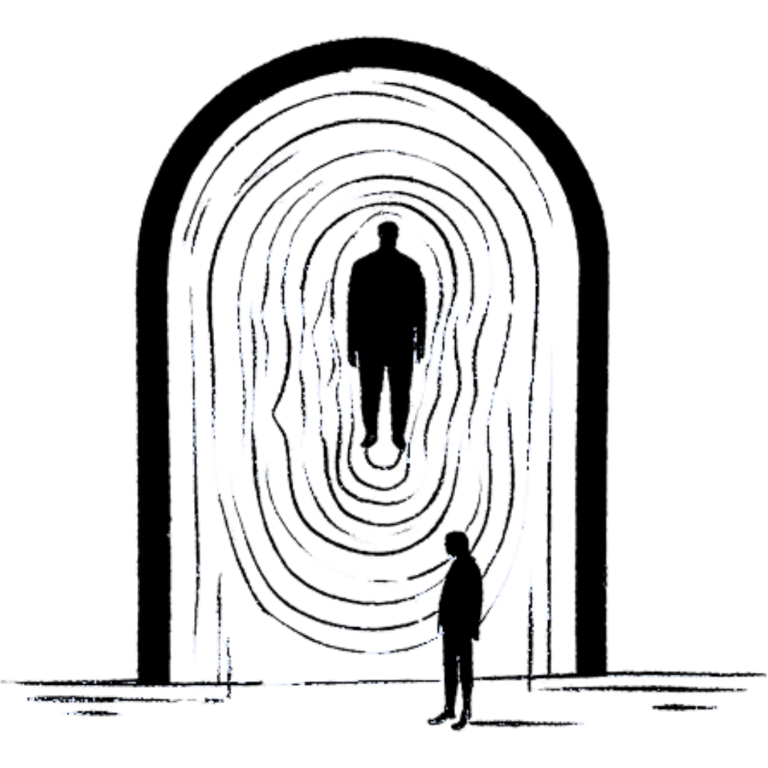
There are no techniques and step by step instructions. I could not bring myself to develop such. What I feel is needed is a different approach towards protection.
So I'll stop saying spiritual and start saying subtle.
Subtle protection isn't something you do. It's something your architecture is - developed to the point where it handles most intrusion without your conscious involvement and alerts you clearly when something needs attention. It draws on the etheric body's native capacity to open and close, developed through physical practice, not will. On the emotional body's capacity to tell your material from someone else's, developed through emotional processing, not shielding. On the causal body's capacity to hold identity steady under pressure, developed through lived self-authorship, not ritual.
As a phrase, subtle protection should mean one thing: keeping clear what connects you to what's real. I lost that connection once and got it back the long way. The house is yours. Now you have to live in it.
Your phone doesn't need a screen protector. It needs to be used carefully, like it matters. A scratched screen still works - which is more than you can say for a protector thick enough to stop every scratch. That one stops your finger too.